
For more than a decade, the phrase “League of Legends” referred to a singular experience: a high-stakes, isometric five-versus-five multiplayer online battle arena (MOBA) played exclusively on personal computers. Players logged in, picked a champion from an ever-expanding roster, and battled across Summoner’s Rift in pursuit of destroying the enemy Nexus.
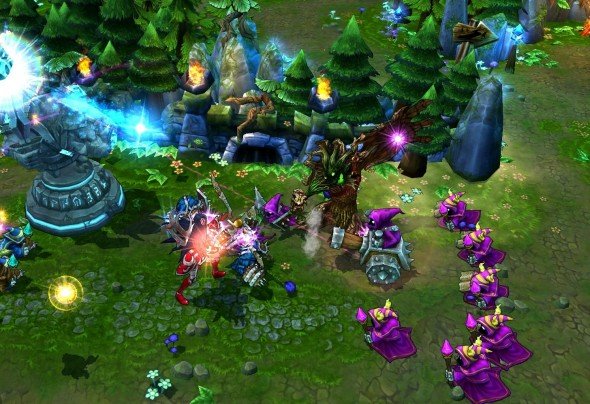
However, the modern era of gaming has witnessed an unprecedented transformation. What was once a isolated PC gaming giant has expanded into a multi-genre, multi-platform gaming ecosystem. Today, modern League of Legends games span everything from mobile battle arenas and auto-battlers to fighting games and narrative-driven spin-offs. Riot Games has successfully transformed a single gaming franchise. Into one of the most comprehensive multimedia intellectual properties in modern entertainment.
The PC Flagship: Modernizing the Classic Battleground
While the League of Legends ecosystem has grown significantly, the core PC title remains the anchor of the franchise. Modernizing a game that launched in 2009 requires constant innovation, technical overhauls, and bold systemic rebalances.
In recent years, the flagship title has undergone profound structural shifts. Modern iterations of Summoner’s Rift feature dynamic terrain modifications driven by Elemental Drakes. Item system overhauls designed to support diverse playstyles, and refined accessibility options like alternative movement controls to welcome new audiences. Furthermore, Riot’s ongoing visual and engine modernization initiatives aim to ensure the core game remains. Visually competitive and technically fluid on modern hardware.
Beyond core ranked play, modern League of Legends regularly introduces rotating game modes that embrace casual chaos. From high-speed Arena duos to nostalgic event modes. The main PC client serves as a living, evolving ecosystem rather than a static competitive simulator.
On-the-Go Combat: League of Legends: Wild Rift
Recognizing that millions of global players prefer handheld devices, Riot built League of Legends: Wild Rift from the ground up specifically for mobile phones and tablets.
Wild Rift is far more than a simple mobile port; it is a meticulously redesigned standalone game. Matches are streamlined to last around fifteen to twenty minutes, catering to modern mobile play patterns. Dual-stick touch controls replace classic mouse-and-keyboard movement, while map layouts, item systems, and champion skill kits are tailored to keep action fast and precise.
Crucially, Wild Rift features exclusive skin lines, unique event structures, and high-fidelity 3D champion models in its home screen menus, giving it a distinct visual identity. For modern gamers seeking genuine competitive MOBA gameplay without being tied to a desk, Wild Rift stands as one of the most polished mobile titles on the market.
The Strategic Masterpiece: Teamfight Tactics (TFT)
Perhaps the most surprising success within the modern League suite is Teamfight Tactics. Originating during the peak of the auto-battler genre explosion, TFT quickly evolved from a temporary experiment into a massive standalone strategy phenomenon available seamlessly across both PC and mobile devices.
In TFT, mechanical execution and rapid reaction times give way to pure strategic calculation. Eight players draft Runeterran champions, combine items, and construct synergistic team compositions that battle automatically on a hexagonal grid.
What keeps TFT continuously fresh is its thematic set rotation system. Every few months, the game entirely resets its champion pool, origin traits, mechanics, and visual themes. One season might focus on cosmic star guardians, while another plunges into cybernetic dystopias or mythological realms. This commitment to regular innovation makes Teamfight Tactics one of the most dynamic strategy games in modern digital entertainment.
Expanding the Fighting Arena: 2XKO
The expansion of the Runeterra lore reached a major milestone with 2XKO, a high-octane 2v2 tag-team fighting game starring iconic champions like Ahri, Darius, Ekko, and Yasuo.
Designed to appeal to both fighting game veterans and competitive League fans, 2XKO allows players to fight solo or team up with a partner online or locally. The game reinterprets classic champion abilities into fluid combat strings, launcher assists, and explosive duo super attacks. By introducing simplified input modes alongside deep execution ceilings, 2XKO represents Riot’s ambitious push to capture a dominant position in the fighting game community, supported by industry-leading rollback netcode and esports infrastructure.
Narrative Frontiers and Single-Player Spin-offs
Beyond competitive online titles, the modern League universe invites players to explore Runeterra through story-driven single-player experiences. Through creative partnerships and dedicated publishing arms, indie studios have delivered rich single-player adventures set within the lore:
- Bandle Tale: A League of Legends Story: A cozy, crafting RPG set in the whimsical, magical realm of Yordles.
- Ruined King: A classic turn-based role-playing game that explores the dark history of Bilgewater and the Shadow Isles.
- Song of Nunu & Convergence: Action-platformers that offer intimate character studies of individual champions in distinct regions.
These narrative-focused titles prove that modern League games do not always require high-stress competition; they can offer peaceful, story-rich journeys for players who simply love the world and characters.
Conclusion: The Unstoppable Force of an Expanding Universe
The transformation of League of Legends over the past several years represents a masterclass in intellectual property evolution. By refusing to remain confined to a single PC MOBA, the franchise has met modern players wherever they prefer to play—on consoles, mobile devices, or competitive tournament stages.
Whether you are mastering tactical draft synergies in Teamfight Tactics, executing tag-team combos in 2XKO, or pushing mid lane on your phone in Wild Rift, the modern League of Legends universe offers a doorway for every type of gamer. As technology continues to advance and new titles join the lineup, Runeterra stands firmly established not just as a game, but as a enduring global cultural phenomenon.